Cantilever Carriage system
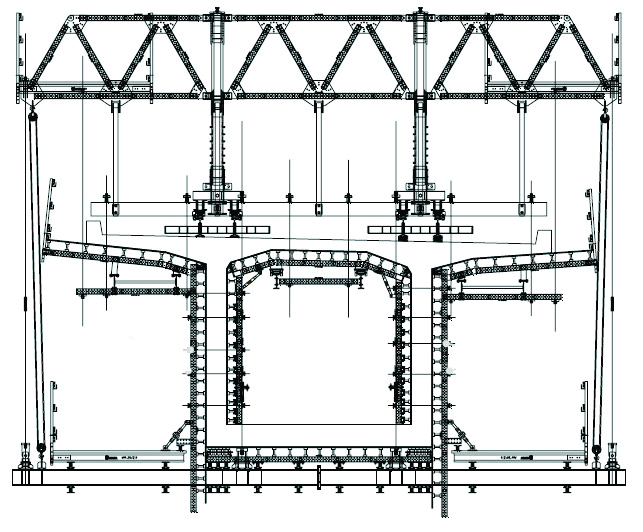
Cantilever Carriage
Cantilever Formwork Carriage is a specialized mobile steel structure engineered for the construction of concrete bridges using the balanced cantilever method. This technique is particularly advantageous for creating wide-span bridges and arches, especially in locations where challenging terrain or significant height makes conventional ground-based shoring impractical or unsafe. The system is adaptable for pier heights over 50 meters and can accommodate spans of up to 200 meters between piers, making it a versatile solution for crossing obstacles like rivers, valleys, and existing infrastructure such as highways and railways.
Core System components
1. Main Load Truss: A primary tubular structure that bears the load of the suspended elements and transfers it to the previously constructed bridge segment.
2. Rolling and Support Systems: Both front and rear systems facilitate the movement and positioning of the carriage.
3. Bracing: Transverse and horizontal bracing ensures the structural integrity and stability of the carriage.
4. Support Structures: This includes a hanging support system, along with structures for the upper, lower, and wing slabs.
5. Formwork and Platforms: The system integrates the necessary formwork for the concrete pour and includes working platforms for crew access.
6. Hydraulics and Accessories: A hydraulic system powers the movement, containment, and advancement of the carriage. This is complemented by advancing rails that guide the carriage.
Key Principles of Operation
• Starter Segment: Construction begins by casting a “pier table” or starter segment directly on top of a bridge pier. This initial section serves as the
stable foundation for the cantilever operations.
• Carriage Installation: A pair of Cantilever Formwork Carriages are assembled and mounted on opposite ends of the pier table.
• Segmental Casting: The carriages, which house the formwork for a single bridge segment, are moved into position. Reinforcing steel is placed, and concrete is poured.
• Balanced Construction: This process is performed symmetrically on both sides of the pier. A segment is cast on one side, and then another is cast on the opposite side to maintain balance and avoid putting excessive bending forces on the pier.
• Advancement: Once a pair of segments has been cast and the concrete has reached sufficient strength, the formwork carriages are advanced forward to the end of the new segment.
• Repetitive Cycle: This cycle of setting up formwork, placing reinforcement, casting concrete, and advancing the carriage is repeated until the cantilevered arms extend to the midpoint of the span, where they are connected to the section extending from the adjacent pier.
Flexibility and Adaptability
• Modular Design: The system is based on standard MK System, which allows for a high degree of modularity. This enables the carriage and formwork to be adapted to various bridge cross-sections, including those with straight or inclined side walls, and even curved bridge designs.
• Variable Geometries: The system can be optimized for any situation, allowing for the construction of bridges with varying distances between piers and decks of varying depths.